
Not all coconut oil is the same
In commercial terms, coconut oil can be divided into several categories depending on the raw material used and the processing method.
The most important distinction is between oil produced from fresh coconut kernel and oil produced from dried coconut (copra).
Virgin Coconut Oil (VCO)
Virgin coconut oil is produced from fresh mature coconut kernel using natural or mechanical processes without chemical refining.
- Raw material: Fresh coconut kernel
- Process: Cold process / centrifuge / fermentation
- Appearance: Clear to colorless
- Aroma: Mild fresh coconut scent
- Positioning: Premium / natural
VCO is commonly used in food, personal care, and wellness products where a natural and minimally processed oil is preferred.

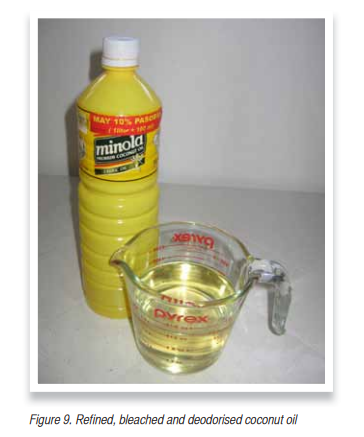
Refined Coconut Oil (RBD)
Refined coconut oil is typically produced from copra (dried coconut) and undergoes refining, bleaching, and deodorizing.
- Raw material: Copra (dried coconut kernel)
- Process: Refining, bleaching, deodorizing (RBD)
- Appearance: Clear
- Aroma: Neutral (no coconut smell)
- Positioning: Commodity / industrial use
RBD coconut oil is widely used in food manufacturing, frying applications, and industrial processes where consistency and neutrality are important.
Crude Coconut Oil
Crude coconut oil is the oil extracted from copra before refining. It contains impurities, higher free fatty acids (FFA), and requires further processing.
- Intermediate product
- Requires refining before final use
- Not typically used for direct consumption
This type of oil is mainly traded within the supply chain between processors and refineries.
Fractionated Coconut Oil (MCT Oil)
Fractionated coconut oil is produced by separating specific fatty acids from coconut oil, usually concentrating medium-chain triglycerides such as C8 and C10.
- Derived from coconut oil
- Highly processed (fractionation)
- Remains liquid at room temperature
- No solidification
This type of oil is commonly used in cosmetics, supplements, and specialty food applications.
Key differences between coconut oil types
VCO
- Fresh kernel
- Minimal processing
- Natural aroma
- Premium positioning
RBD
- Copra-based
- Fully refined
- Neutral odor
- Commodity use
Crude Oil
- Unrefined
- High FFA
- Intermediate product
Fractionated
- Processed derivative
- Liquid stable
- Specialty applications
How to choose the right type of coconut oil
The right type depends on the intended application:
- Food and premium products → VCO
- Mass food processing → RBD
- Industrial supply chain → Crude oil
- Cosmetics / supplements → Fractionated oil
Buyers typically evaluate based on consistency, specification, processing method, and application suitability rather than just the name of the oil.
Simple takeaway
- Coconut oil has multiple types, not just one
- Main categories: VCO, RBD, crude, and fractionated
- Each type is defined by raw material and process
- Different types serve different markets
- Understanding this helps buyers choose correctly